
Imagine your phone rings. The caller ID says “Mom.” you answer, and hear her voice, panicked, sobbing, and desperate. She claims she’s been in a horrific accident and needs money immediately for bail or medical costs. You would do anything to help, right?
Unfortunately, this is the new face of cyber fraud in India and across the globe. It isn’t your mother on the phone; it’s a criminal using AI voice scam technology to steal your life savings. Get scambuster before it is too late.
The Rise of Deepfake Call Scams
According to a global study by McAfee, one in four people has already encountered an AI voice scam. These are not your typical “robocalls.” These are high-tech AI Voice scam designed to bypass your emotional defenses.
The emotional connection makes the scam feel “true” before you even answer the phone. Because you are hearing a familiar voice, your mind automatically fills in the gaps. Even if the voice sounds a little robotic or off, your brain wants to believe it is your relative. The scammers also use “social engineering,” often mentioning details they scraped from your public social media profiles like a pet’s name or your recent vacation plans to make the story feel even more authentic.
When you are panicking, your brain’s “logic center” goes offline. You stop thinking about whether the situation is possible or if the call seems strange. Your only goal becomes saving the person you love. The scammer counts on this. They want you to move fast so you don’t have time to call anyone else, check the facts, or notice the small glitches in the voice quality.
How Do Voice Cloning Scams Work?

It takes surprisingly little effort for a criminal to impersonate a loved one.
- The Three-Second Rule: Scammers only need three seconds of audio to create a clone with 85% accuracy.
- Accessible Tools: There are dozens of free AI voice generator programs online. With just a bit more audio, accuracy jumps to 95%.
- Universal Reach: These tools can mimic any accent : Indian, American, British, or Australian which makes voice cloning scams a global threat.
A Mother’s Nightmare: The Reality of AI Kidnapping Scams
Bruce Schneier, world-renowned cybersecurity expert and author, famously notes:
“Amateurs hack systems; professionals hack people.” This rings true for AI scams. By cloning a voice, scammers bypass digital firewalls and instead attack the psychological firewall of a parent’s love or a friend’s loyalty.
This can be seen in a chilling real-life case, a mother named Rachel received a call from her daughter’s number. The voice was identical. The “daughter” claimed she had been kidnapped after a car accident. For two hours, the scammer gave Rachel step-by-step directions to wire $3,270 via retail money transfers.
It was only when her real daughter called from a separate line that the truth came out. This psychological manipulation is why 77% of victims lose money once they pick up the phone.
Why India is a Major Target for Cyber Fraud
The statistics for cybersecurity in India are particularly alarming. While the global average for scam encounters is 25%, in India, 47% of adults have been targeted by scammers.
| Region | Encounter Rate | Victims Who Lost Money |
| Global | 25% | 77% |
| India | 47% | 83% |
In India, 48% of victims lost over ₹50,000. The high rate of social media usage, where 53% of adults share their voice online weekly which provided a goldmine of data for criminals to harvest audio for deepfake technology.
How to Prevent Online Scams: Your Action Plan
Knowing how to prevent online scams and AI Voice Scam is the only way to stay safe in an era where you can no longer “believe your ears.”
1. The Secret Family Code Word
This is the #1 defense recommended by the National Cybersecurity Alliance. Establish a random, non-guessable word with your family. If a “loved one” calls in a panic, demand the code word. If they can’t provide it, hang up.
2. Verify Before You Pay
If you receive a suspicious request for money:
- Hang up and call back: Use the contact number saved in your phone, not the one that just called you.
- Ask a “human” question: Ask about a memory or a detail that isn’t on social media.
- Identify Payment Red Flags: Scammers love cryptocurrency, gift cards, and wire transfers because they are untraceable.
3. Use Scambuster for Real-Time Protection
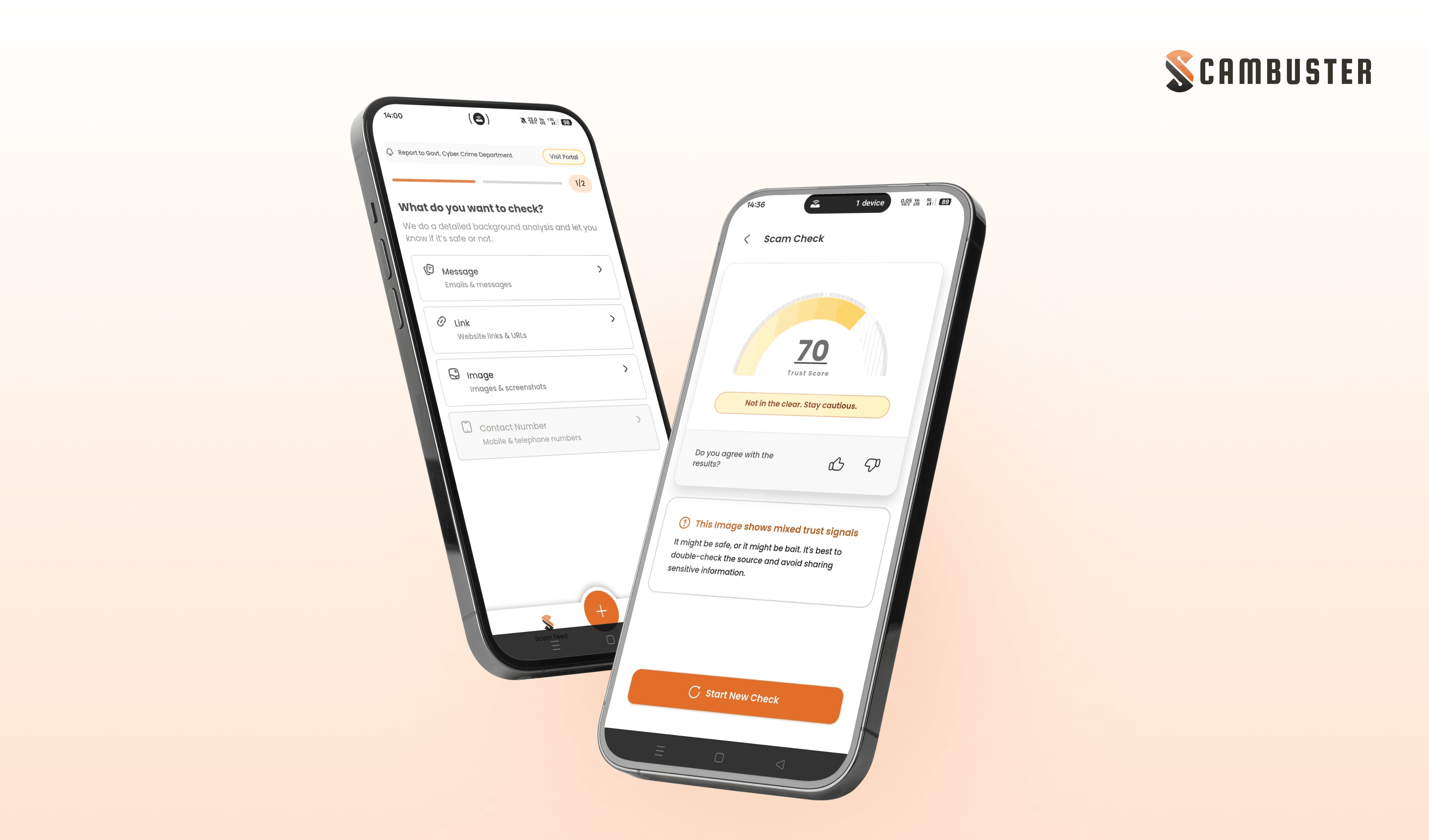
To stay ahead of digital banking fraud and AI scams, you need a community-driven defense. Scambuster is a dedicated platform designed to provide timely alerts on the latest tricks.
- Report Suspicious Activity: By reporting a fake call, you protect thousands of others.
- Awareness for All: Scambuster explains complex cybersecurity threats in simple language for seniors and students.
Stay Alert, Stay Safe
The shocking truth about deepfake call scams is that our empathy is being used against us. While AI offers incredible benefits, it also arms criminals with powerful tools for identity theft.
Don’t let your family become a statistic. Set your family code word today, limit the voice data you share on social media, and use Scambuster to stay informed about online safety tips. In the digital world, a few seconds of skepticism can save your life savings.
Frequently Asked Questions – FAQs
1. How do scammers get my voice?
They don’t need much! Scammers can create a convincing clone using as little as 3 to 10 seconds of your voice. They often harvest this from public social media videos, TikTok posts, interviews, or even voicemail greetings.
2. Is there a way to tell if a voice is fake?
It can be very difficult, but look for these signs: the voice may sound slightly robotic, have strange pauses, lack natural emotion, or have a weird background hum. However, the best defense is to never trust the voice alone.
3. Why don’t they just use a real person?
Voice cloning allows scammers to “call” hundreds of people at once without having to talk to anyone themselves. It’s a way to scale their crime while using a trusted, familiar voice to lower your defenses.
4. What should I do if I get a suspicious call?
Hang up immediately. If the caller claims to be a relative in an emergency, use a separate device or line to call that relative directly on a number you already have saved in your contacts.
5. Are grandparents more at risk?
Yes, often called “Grandparent Scams,” criminals target seniors because they may be less familiar with AI technology and have a strong, protective instinct toward their grandchildren.
6. How to protect my social media from scammers?
Set your social media accounts to private. If you must have a public profile, avoid posting videos where you are speaking clearly for long periods, as these provide the cleanest audio data for scammers to copy.
7. What is a “Safe Word” and how do I use it?
A safe word is a secret, pre-agreed phrase known only to your immediate family. If someone calls claiming to be a loved one in danger, ask them to say the safe word. If they can’t, you know it is a scam.
8. Should I record my own voice for my voicemail?
Use a generic, pre-recorded system greeting instead of one in your own voice. This prevents scammers from easily downloading your voice sample to use as a “training” file for their AI tools.
9. Can I report these scams?
Yes. Report the incident to your local police cyber cell and your national fraud reporting center. Providing the phone number used in the scam can help authorities track the criminals.
10. If I am scammed, can I get my money back?
It is very difficult. Because scammers usually demand payment via untraceable methods (like crypto, wire transfers, or gift cards), the money is often gone instantly. This is why prevention and verification are your only true safeguards.