
From the bustling corridors of Park Street to the quiet living rooms of senior citizens across Bengal, cybercrime has evolved from a nuisance into an industrial-scale enterprise. In recent months, Kolkata and its surrounding hubs have emerged as ground zero for a sophisticated web of digital scams. Law enforcement agencies, including the Enforcement Directorate (ED) and Kolkata Police’s Lalbazar cyber cell, are racing against time to dismantle syndicates that are draining crores of rupees from unsuspecting citizens almost daily.
If you think cyber fraud only happens to the technologically naive, think again. The latest wave of scams targets intelligence, ambition, and fear alike, utilizing high-tech intimidation and financial engineering.
Let’s break down the three major fraud types dominating headlines and threatening wallets right now and more importantly, how you can protect yourself.
1. The Terror of “Digital Arrests”: The ₹7 Crore Wake-Up Call
The term “digital arrest” sounds like a sci-fi plot, but it has become one of the most devastating extortion tools used by cybercriminals. Fraudsters pose as officials from the Central Bureau of Investigation (CBI), Narcotics Control Bureau (NCB), or Mumbai/Delhi Police, using forged court orders, fake letterheads, and video calls set against backdrop replicas of police stations.
The scale of this menace was underscored when federal agencies cracked down on syndicates linked to high-profile extortions—such as the massive ₹7-crore digital arrest fraud targeting prominent industrialists, with key handlers and money launderers being hunted down right here in Kolkata.
How it works:
Victims who are frequently senior citizens or high-net-worth individuals, receive a call claiming a parcel containing illegal drugs, passports, or money laundering evidence has been intercepted in their name. They are ordered to stay confined to their homes on a live video call, cut off from family and legal counsel, under the constant threat of immediate arrest. Terrified and disoriented, victims transfer massive sums to “safe government accounts” to clear their names, only to realize the accounts belong to shell companies and overseas syndicates.
2. The Park Street Mule Network: ₹2.4 Crores in Just 48 Hours
Behind every online scam is a dirty secret: the money has to go somewhere. Enter the “mule account” network—a shadow economy of bank accounts rented, bought, or fraudulently accessed to channel stolen funds.
In a recent chilling discovery, Lalbazar launched a intensive probe into a sophisticated money-laundering racket operating out of private bank branches near Park Street’s Apeejay House. Cybercriminals managed to gain unauthorized control over at least 10 bank accounts, siphoning nearly ₹2.5 crore within weeks. The velocity of the crime was staggering: a staggering ₹2.4 crore was funneled through just these 10 accounts in a mere 48-hour window.
How it works:
Fraudsters use phishing, insider complicity, or identity theft to hijack dormant or active bank accounts. These accounts act as wash cycles, rapidly splitting, transferring, and converting stolen cyber-fraud money into cryptocurrency or high-value assets before law enforcement can freeze them.

3. The Fake Investment App Trap: Losses Crossing Crores
With financial literacy on the rise, millions of Indians are looking to park their savings in stock markets, crypto, and mutual funds. Cybercriminals have weaponized this ambition by deploying an army of rogue mobile applications.
Kolkata Police recently issued urgent warnings against over 50 unauthorized and fraudulent investment apps, noting that city-wide cyber fraud losses surged dramatically (hitting staggering multi-crore figures like ₹15 crore in single monthly windows). Promising unrealistically high daily returns, these apps hook victims through social media ads, WhatsApp groups, and Telegram channels.
How it works:
Initially, the app’s custom dashboard shows exponential profits, encouraging victims to plow their life savings into the platform. However, the moment a user attempts to withdraw a major sum, the app locks them out, demands exorbitant “tax fees” or “commission charges,” and vanishes overnight leaving behind a ghost digital footprint.
Stay Safe: The Scambuster’s Playbook
Cybercriminals rely on three psychological triggers: Fear (digital arrests), Greed (fake investment apps), and Secrecy (mule account manipulation). Beat them at their own game by following these golden rules:
Law Enforcement Never Video-Calls for Arrests: No police agency, CBI, RBI, or court will ever conduct an interrogation, trial, or arrest over Skype, WhatsApp, or Zoom video calls. If someone claims you are “digitally arrested,” hang up immediately.
Verify Before You Invest: Never download trading or investment applications from unsolicited links, text messages, or social media ads. Stick strictly to verified platforms authorized by SEBI and downloadable from official app stores with transparent developer histories.
Protect Your Bank Identity: Never share your KYC documents, OTPs, or net-banking credentials with anyone. Regularly monitor your bank statements for unauthorized micro-transactions.
Why You Need Scambuster
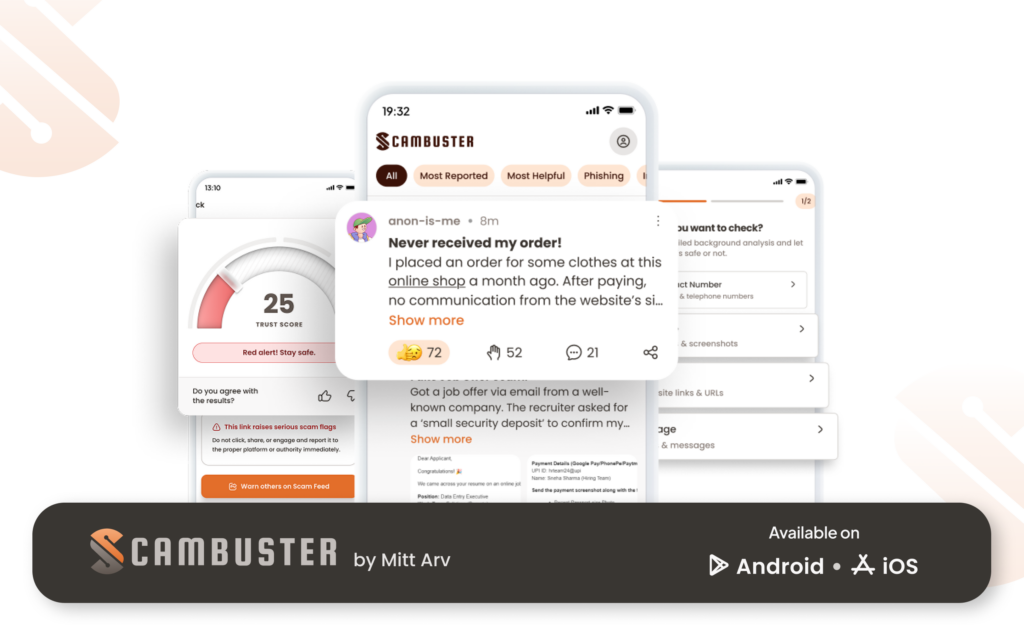
Don’t Wait Until It’s Too Late. Fight Back with Scambuster.
The digital underworld is constantly engineering new ways to target your hard-earned money. But you don’t have to navigate these dangerous waters alone.
- Spotted a suspicious app, received a chilling threat call, or want to verify if a financial scheme is a scam?
- Join the Scambuster community today to access real-time fraud alerts, expert analysis, and a network dedicated to keeping digital India safe.
👉 [Click Here To Download Scambuster]
Stay alert, stay secure, and let’s bust the scammers together.