
₹30 Crore ! That is the staggering amount stolen by a cyber fraud racket right in Mohali, Punjab and your bank account could easily be the next target!
The digital revolution in India has been nothing short of miraculous. From the bustling streets of Mohali to the quietest villages in Bihar, millions of Indians are now connected, transacting, and interacting in real-time. But as the “Digital India” initiative has empowered citizens, it has also widened the playground for new types of scams.
The recent uncovering of a massive ₹30 crore cyber fraud racket in Punjab’s Mohali has sent shockwaves across the region. With 13 major cases reported in just four months, this isn’t just an isolated incident; it is a glaring red flag. If you think you are immune because you are “careful,” it is time to rethink your strategy. Cybercrime has moved from simple phishing emails to highly organized, professional syndicates that view your bank account as their next paycheck.
The Mohali Racket: A Masterclass in Digital Deception
The Mohali syndicate operated with alarming sophistication, mirroring the tactics of organized financial crime. Investigators discovered that the group used a complex web of “mule” bank accounts. These are accounts that appear legitimate but are actually rented or purchased from unsuspecting individuals, specifically used to route and wash stolen money before it disappears into untraceable digital wallets or offshore accounts.
The victims were lured through a variety of high-pressure tactics, including:
- Fake Investment Portals: Promises of guaranteed, massive returns on cryptocurrency or stock market “expert” tips.
- Work-from-Home Traps: Recruiting victims for “data entry” or “part-time tasks” that quickly lead to financial extortion.
- Social Engineering: Impersonating bank managers or law enforcement officers to create a sense of manufactured urgency.
A Pan-India Crisis: The “Scam-demic”
The Mohali case is merely a symptom of a much larger, national epidemic. Across India, the blueprint remains strikingly similar.
Consider the recent crackdown under “Operation Mule Hunt 2.0“ in Gujarat, where 13 people were arrested for a staggering ₹631 crore scam, linked to nearly 1,000 active cybercrime complaints. Similarly, in Gurgaon, police busted a betting-cum-cyber fraud racket operating out of a residential flat, where students and graduates were recruited as “handlers” to manage the money trail for a network suspected to have roots as far away as Dubai.
From the “Digital Arrest” scams where victims are kept on video calls for hours while being told they are under investigation for money laundering, to the rise of AI-powered deepfake voice scams—the modus operandi is evolving. Whether you are in Bengaluru, Delhi, or Mohali, the scammers are using the same automated tools, the same psychological manipulation, and the same global money-laundering channels.

The Core Problem: A Critical Lack of Awareness
Why do these scams keep working? Despite constant warnings, why are millions of rupees still being lost every single day?
The answer lies in a critical gap in cyber-awareness. Many users still treat the internet like a physical space, failing to realize that a single click or a shared OTP can bypass decades of traditional security.
- Trusting the “Official” facade: Scammers now use high-quality logos, official-looking documents, and spoofed phone numbers that look exactly like your bank’s helpline.
- The Urgency Trap: Fraudsters bank on human panic. If someone calls you saying your account is blocked, your instinct is to fix it immediately, not to pause and verify.
- The “It won’t happen to me” Bias: Many assume that since they aren’t “tech-savvy,” they aren’t targets, or conversely, that they are “too smart” to be fooled. Both mindsets are dangerous.
The sheer velocity of the internet means that once your money is transferred to a mule account, the window to recover it is measured in minutes, not hours.
How to Protect Yourself From Cyber Fraud
While the scale of these syndicates is daunting, you are not helpless. Start by adopting “Cyber Hygiene”:
- Never share OTPs: Not with a bank official, not with a “government” agent, and never over a video call.
- Verify the Source: If an unexpected message or call urges you to act, stop. Open your browser, search for the official website of the company or bank, and call their official number listed on that site—not the one provided by the person who called you.
- Check App Permissions: Do not download apps from non-reputable sources (e.g., APK files sent via WhatsApp). Use only official app stores.
- Report Fast: If you suspect you are a victim, the first hour is crucial. Call 1930 (the national cybercrime helpline) or report the incident on cybercrime.gov.in immediately.
Don’t Wait to Become a Statistic: Join the Community
Knowledge is your strongest firewall. But staying informed shouldn’t be a chore, it should be part of your daily digital routine.
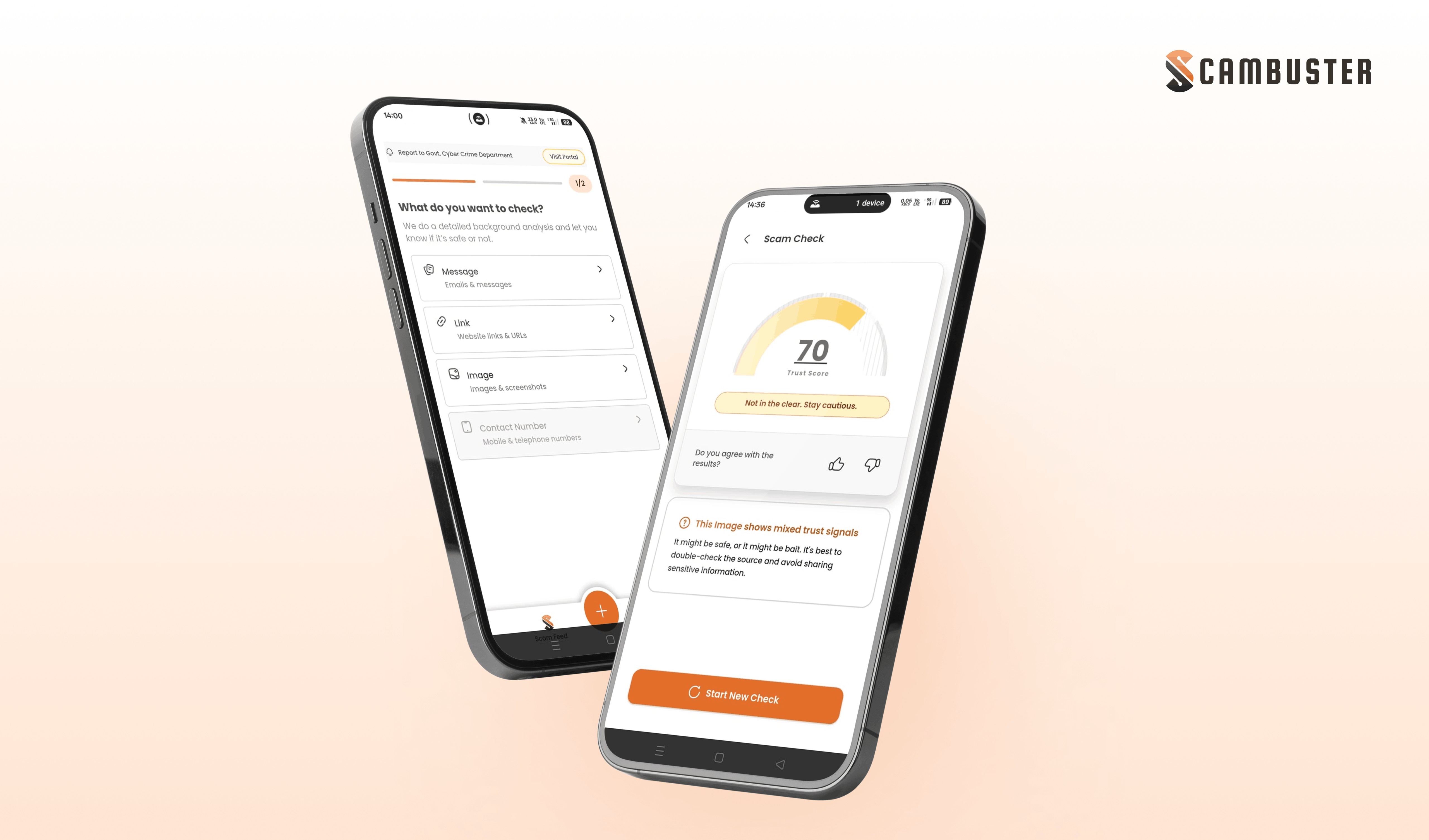
This is where Scambuster comes in. Scambuster is a community-driven platform designed to keep you one step ahead of cybercriminals. Whether you want to share a suspicious experience, stay updated via our live Scam Stories Feed, or easily report incidents directly to the police, Scambuster provides the tools you need to fight cyber fraud.
Even better, you can add Scambuster as a workspace extension to ensure that protection and awareness are always just a click away, right where you work.
Ready to fortify your digital life?
Join the Scambuster community, add the extension, and start staying safe today!