

Good salary, easy work, maybe even a chance to work abroad. You apply, get selected, and think your life is about to change for the better. But instead of finding your dream job, you end up trapped in a prison-like compound, forced to scam innocent people online while facing torture and threats.
This isn’t a movie plot. It’s the horrifying reality that thousands of young Indians and people from around the world are experiencing right now in Southeast Asian countries like Cambodia, Myanmar, and Laos.
The Trap is Set
These scams usually start innocently enough. Young people, often fresh out of college or looking for better opportunities, see job advertisements on social media platforms. The positions sound legitimate—data entry jobs, digital marketing roles, or sales positions. The pay seems attractive, especially for someone struggling to find work back home.
According to India’s government, over 6,700 Indians have been rescued from these scam operations so far. But the real number of people still trapped is unknown because many reach these countries through illegal channels or fraudulent agents.
Take Stephen’s story, for example. He was offered a simple data entry job in Cambodia. After arriving, he discovered the truth: he was expected to create fake social media accounts using photos of women and use them to contact and scam people. When victims like Stephen try to refuse or escape, they face violence and threats.
How the Scam Works
Once victims arrive in these countries, their passports are often taken away. They’re locked in compounds that look like casinos or office buildings from the outside but function as prisons on the inside. Armed guards watch them around the clock.
The victims are then forced to run various online scams. One of the most common is called “pig butchering” or romance scams. In these operations, scammers create fake identities online and pretend to develop romantic feelings for their targets. Over weeks or months, they build trust and eventually convince their victims to invest money in fake cryptocurrency platforms. Once the money is transferred, it disappears forever.
Other scams include pretending to be law enforcement officers and extorting money from frightened people, or running fraudulent investment schemes. According to reports, victims in India alone have lost at least 5 billion rupees (about $59 million) to these operations in just six months.
The Human Cost
The psychological damage to those trapped in these operations is devastating. Pradeep Vijay was only 24 when he was trafficked to Myanmar in 2022. He thought he was getting a data entry job but was forced to scam Indian immigrants in the United States. His brother Deepak said that even after being rescued, Pradeep refuses to talk about what happened to him and is completely changed as a person.
The United Nations estimates that at least 120,000 people are trapped in Myanmar’s scam centers alone, with another 100,000 in Cambodia. These aren’t just numbers—they’re real people, many young and tech-savvy, who had dreams and families waiting for them at home.
Why Is This Happening?
Several factors make this problem so difficult to solve. First, criminal organizations are sophisticated and well-organized. They often work with local armed groups for protection, making them hard to shut down.
Second, many of these operations are in remote areas or conflict zones where governments have limited control. In Myanmar, for instance, some scam centers operate in regions controlled by militia groups rather than the national government.
Third, international cooperation is challenging. As cyber law expert Pawan Duggal points out, there’s no international treaty specifically dealing with these cross-border cybercrimes. Each country has different laws, making it hard to prosecute criminals or rescue victims.
What’s Being Done?
The Indian government has been working with countries like Cambodia and Myanmar to rescue its citizens. India’s embassies in these countries receive four to five complaints daily from trapped individuals. The government has set up helplines, WhatsApp numbers, and grievance portals where people can seek help.
The Ministry of External Affairs regularly issues warnings on social media about these fake job offers, advising people to thoroughly verify any recruitment agents or companies before accepting jobs abroad.
International organizations like the United Nations and ASEAN (Association of Southeast Asian Nations) are also working to combat these crimes through better coordination between countries.
How to Protect Yourself
The best defense against these scams is awareness. Here are some red flags to watch for:
- Job offers that seem too good to be true, especially those promising high pay for simple work
- Recruiters who pressure you to decide quickly
- Companies that are difficult to verify online or have no clear presence
- Jobs that require you to travel to another country on a tourist visa
- Requests for upfront payments or fees
- Use Scambuster to be aware of the latest scams
Always research companies thoroughly, talk to your family about job offers, and never travel abroad for work without proper documentation and verification.
The Bottom Line: Protect Yourself!
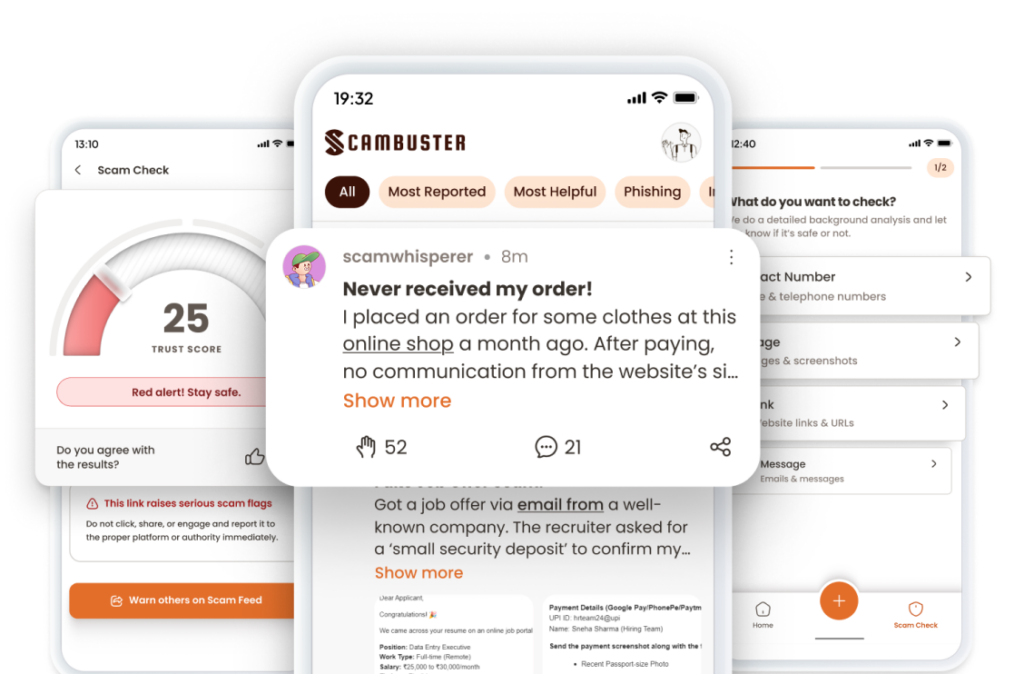
Behind every scam statistic is a real person seeking a better life. While governments seek long-term solutions, awareness is our most powerful immediate defense, and platforms like Scambuster act as an essential early warning system against fake job scams trapping youth in Southeast Asia.
When users spot sketchy online job recruiters, they can log it immediately to warn others. The platform actively dismantles these dangerous networks through targeted features:
- Instant Reporting: Users can immediately flag suspicious social media job posts to warn others.
- Direct Police Connection: Offers a one-click button routing reports straight to authorities like the Indian Cybercrime Coordination Centre.
- Survivor Stories: Shares real accounts from escapees to expose exactly how traffickers use “data entry” traps.
- Red-Flag Education: Teaches youth to spot critical warnings, like upfront fees or rushed hiring.
By utilizing social media for protection rather than deception, Scambuster can save thousands from life-ruining mistakes.